



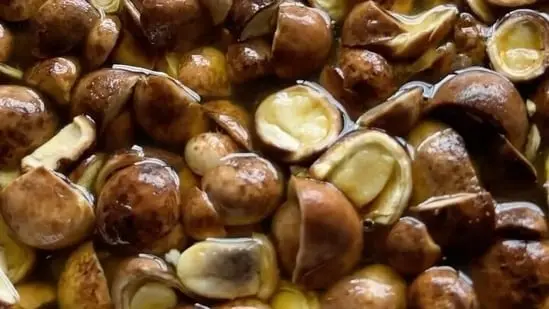
This monsoon, rugda mushroom, also known as putu, boda or rugra, is finding a new audience online. Instagram recipe Reels featuring the rare wild mushroom have racked up millions of views, with several videos crossing the 5-million mark as creators share everything from heirloom family recipes to rustic village-style curries. The viral buzz has introduced many Indians to a seasonal delicacy that has long been cherished by indigenous communities across eastern India.
Found in the sal forests of Jharkhand, Odisha, Chhattisgarh and parts of West Bengal, rugda (Astraeus hygrometricus) appears beneath the forest floor after the first monsoon showers and is hand-foraged for only a few weeks each year. Its rarity has made it one of eastern India's most prized seasonal foods, with prices ranging from ₹1,000 to ₹3,000 a kilogram. While social media may have brought rugda into the spotlight, for generations of forest communities it has remained a cherished monsoon staple.
Why Rugda mushroom can't be farmed
Unlike button, oyster or milky mushrooms that can be cultivated commercially, rugda survives in a natural partnership with the roots of sal trees, exchanging nutrients through an underground fungal network. Scientists call this an ectomycorrhizal relationship. Despite years of research, there is still no commercially viable way to cultivate rugda, making every mushroom sold today a wild forest harvest.
Where is Rugda mushroom found? Price, season and availability
Where: Sal forests of Jharkhand, Odisha, Chhattisgarh and parts of West Bengal
When: Late June to early September, depending on the monsoon
Who harvests it: Indigenous communities including the Munda, Ho, Oraon, Santhal and Kharia
How: Foragers identify tiny cracks or raised patches on the forest floor before carefully digging out the mushroom by hand.
Price: Usually ₹1,000-3,000 per kg, though rates can climb even higher in years of poor rainfall.
Availability: Though available fresh locally, shoppers elsewhere in India may occasionally find rugda on e-commerce platforms during the season.
Why is Rugda called 'vegetarian mutton'?
The nickname comes from texture rather than taste. Unlike many mushrooms that soften while cooking, rugda stays firm and develops a hearty, meat-like bite. It readily absorbs spices and is traditionally cooked in rich gravies, making it a popular substitute for meat during Shravan, when many households avoid non-vegetarian food but still crave robust, filling meals.
How to make traditional Rugda curry at home
Ingredients
250g cleaned rugda mushrooms, 2 onions, 2 tomatoes, ginger, garlic, mustard oil, turmeric, red chilli powder, coriander powder, cumin powder, salt and fresh coriander.
Method
Wash the rugda thoroughly to remove all traces of soil and boil for five to seven minutes. Heat mustard oil and sauté the onions until golden before adding ginger, garlic and tomatoes. Stir in the spices to prepare a thick masala, then add the boiled rugda and cook for another 8-10 minutes. Garnish with fresh coriander and serve hot with steamed rice or rotis.
Regional twist: In parts of Jharkhand, rugda is also cooked with potatoes, roasted gram paste or poppy seed paste. Some tribal households simply sauté it with garlic, green chillies and mustard oil to let its earthy flavour shine.
Rugda mushroom health benefits and monsoon safety tips
According to Alka Chaudhary, Head, Dietetics Department, Accord Super Speciality Hospital, Faridabad, rugda, like other edible mushrooms, is a nutrient-dense seasonal food and can be a healthy addition to the diet when sourced and cooked properly.
Health benefits of Rugda mushroom:
- Rich source of plant-based protein and dietary fibre
- Naturally low in calories and fat, making it a weight-friendly food
- Good source of vitamin D, potassium, phosphorus and selenium
- Contains antioxidants and bioactive compounds with anti-inflammatory properties that may help support immunity during the monsoon
- Selenium also supports thyroid health, while emerging research suggests mushrooms may help support mood and mental well-being
Monsoon caution
"Warm and humid weather encourages the growth of bacteria, mould and other microorganisms, causing mushrooms to spoil more quickly. Always choose fresh mushrooms, cook them thoroughly and store them properly. Avoid consuming spoiled mushrooms as they may cause food poisoning," advises Chaudhary.
Did you know?
Rugda is harvested while it is still young and round beneath the soil. If left untouched, it eventually bursts open into a star-shaped fungus, which is why scientists classify it as a false earthstar.