



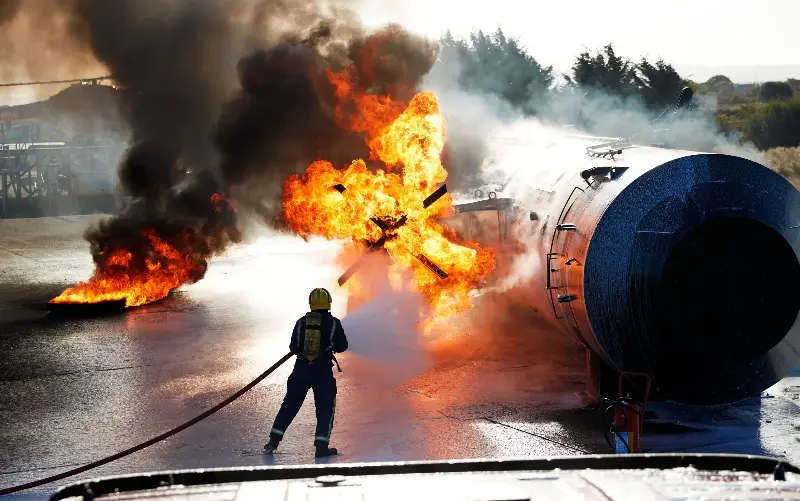
Plumes of smoke rising into the sky, emergency vehicles rushing to the scene and dozens of passengers being carried over the tarmac, some sporting what appear to be major injuries. It’s exactly the sort of rare, blood-chilling spectacle you’d hope to never see at an airport, yet it’s something that takes place far more often than you might assume – and, in fact, should be a source of profound reassurance, not horror, for the nervous traveller.
Practising for the worst
How so, you might say? Well the answer to that particular riddle sits with the Civil Aviation Authority, which mandates – not unreasonably – that commercial airports test their emergency readiness by organising live-action drills at least every two years. These real-life exercises, usually involving hundreds of representatives from emergency services, have been used to test some of the most terrifying scenarios in aviation, from plane crashes to terrorism.
“In recent years, we’ve run exercises based on a hijack, a runway collision and a crashed plane,” says Ryan Ubaldo, a senior member of Heathrow Airport’s operational resilience team, whose 100 staff members are tasked with preparing for the sort of eventualities that could plausibly befall a modern passenger airport and then testing how the airport would respond to them.
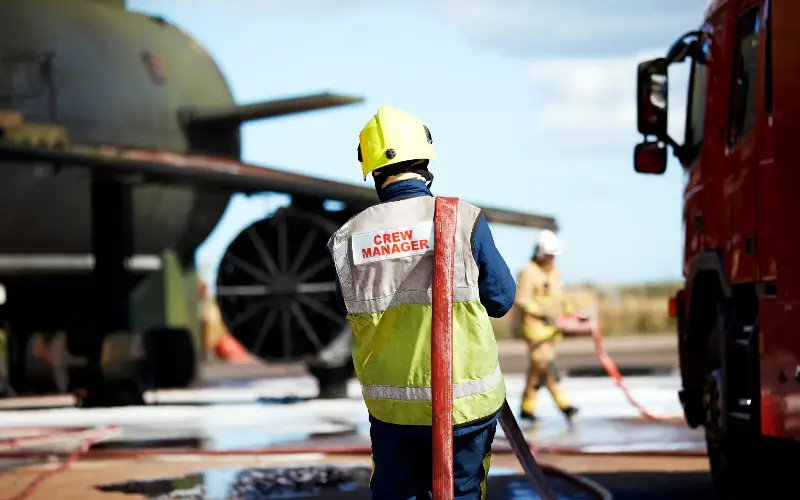
While the resilience team will focus on more than 100 emergency scenarios each year, he adds, the vast majority of these will be “desktop exercises” – structured discussions designed to probe contingency plans. Only a tiny minority, usually one per year, will be chosen to receive the full live-action treatment, typically regarded as the gold standard when it comes to emergency planning.
“Live exercises can expose very practical issues when it comes to emergency response,” says a spokesman from Blake Emergency Services, a Stockport-based firm that has worked with airports across Europe on emergency drills. Timings that might look reasonable on paper might turn out to be less so in practice, allowing airports to fine-tune their response for the real thing.
Fake wounds and retired planes
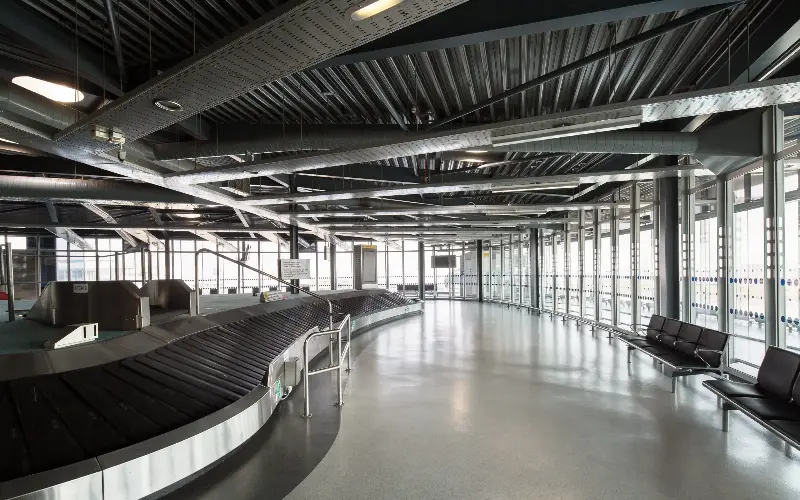
Of course, they need space to do them. In the case of Heathrow, the resilience team has made creative use of the airport’s closed terminal, Terminal One, which still retains all of the fixtures and fittings needed to make certain exercises more realistic. At other times, the airport has run drills overnight, when passenger air traffic is restricted and much of the terminal is closed to the public.
Last year, for example, Heathrow ran a major emergency preparation exercise – Operation Nexus – based around a fire in the underground train tunnels that carry tens of thousands of passengers every week. Hundreds of staff members volunteered to play stranded and panicked passengers, as operational staff tested the procedures for getting them above ground.
Naturally, these drills are designed to be as true-to-life as possible: whether that’s bringing in make-up specialists to create realistic-looking injuries – “we work with one company that’s very good at creating open wounds with fake bones,” says one airport insider – or using retired planes to simulate the conditions of an actual accident.
“We have a mock aircraft here that we use for fire-based exercises,” says Nick Worgan, senior fire officer at Exeter Airport. Over a video call, he tells me how the fuselage can be fitted with live-fire cribs as well as a state-of-the-art system to pump synthetic smoke into the cabin. A member of the fire team will sit at the external control panel, dictating the intensity and direction of the flames to simulate the aftermath of a crash.
The aftermath
Getting up close and personal with a burning plane is one thing. But the real aim of these exercises, he says, is to test exactly whether the responders have the resources they need in such a situation. “One thing we’ve tested is whether our fire engines can get the water they need from the hydrants quick enough to respond to a major fire,” says Mr Worgan, not least since airport fire engines are typically much larger than their everyday counterparts.
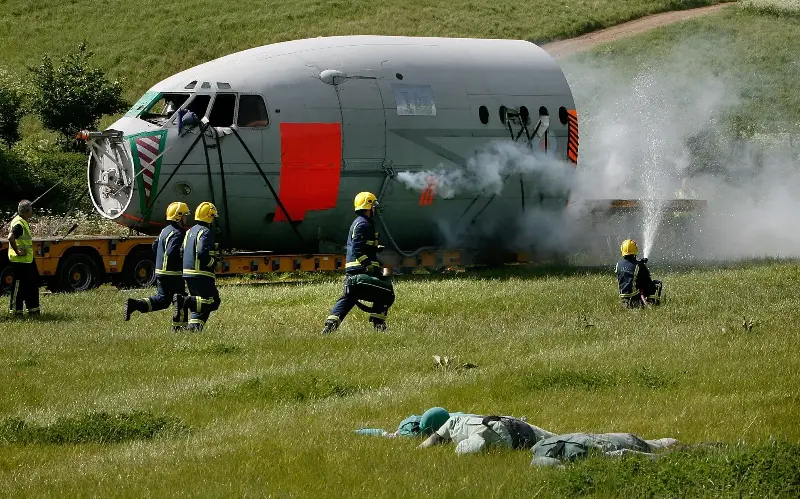
Likewise, the response doesn’t end once the fire has been subdued. As the airport firefighters battle with the smoke-filled plane on the tarmac, operational staff will work with police officers and the ambulance services to run everything from first-aid tents to a makeshift media centre providing official updates on the situation.
It’s an approach that strikes a chord with Heathrow’s Ubaldo. “I think one of the most important factors to this job is that we are always working with so many different teams across the airport,” he says. Then there are the dozens of emergency service contacts who need to be kept in the loop throughout the year, ensuring they are as familiar as possible with the terrain.
Getting that right takes resources, brainpower, planning and determination, say experts, rather than just casualty make-up and smoke machines. But when it comes to putting it all to the test? Anyone familiar with emergency planning will tell you there is only one proper way to do that: a simulated disaster situation is just the ticket.