



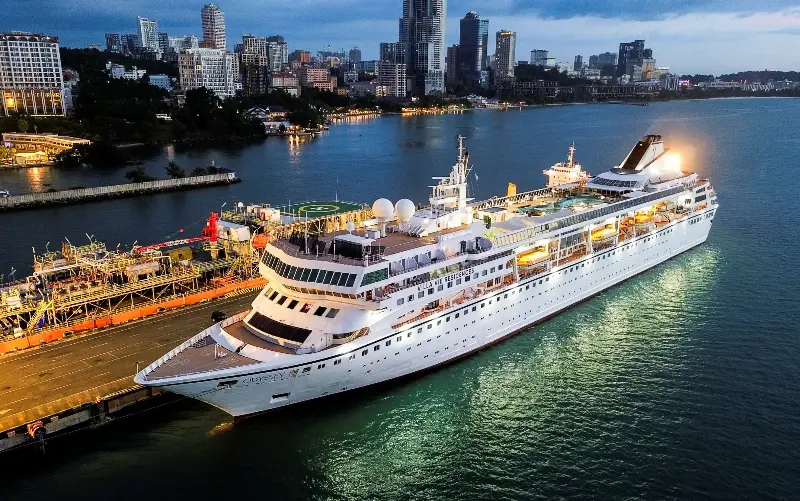
Has the dream of residential cruising, offering the chance to live permanently on a ship as it continuously circles the world, turned to dust? The “never-ending” voyage of Villa Vie Odyssey has ground to a farcical halt, and with many other projects stuck at the design stage, the future looks uncertain. Can the sector weather the headwinds of high fuel prices and financial uncertainty? Here are the projects that have launched, or are in the pipeline.
Villa Vie Odyssey: out of money
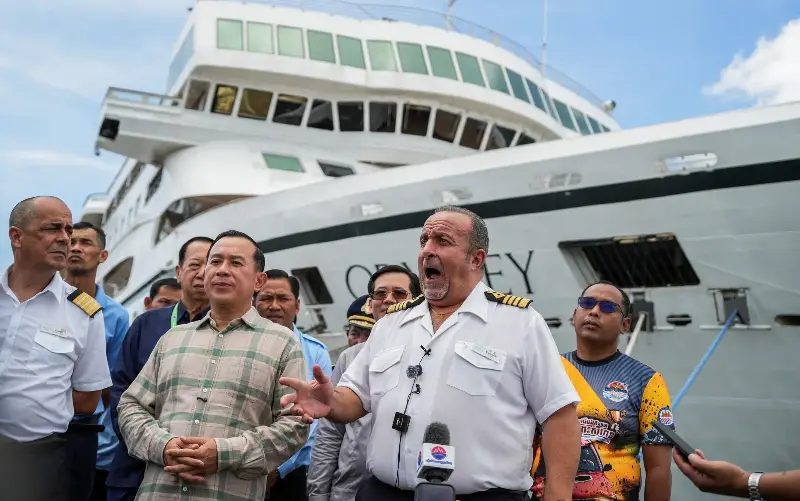
The former Fred Olsen ship Braemar finally set sail on a maiden three-and-a-half-year world cruise in October 2024 after an extended four-month dry dock in Belfast. The plan was to create an affordable floating home that could circumnavigate the Earth for up to 15 years. But this month, all 200 residents were ordered to disembark in Cambodia, with operators Villa Vie Residences blaming financial troubles caused by the soaring cost of fuel following the Iran war. The ship has now been seized in Singapore.
The company has not yet commented on whether it still plans to buy a second ship or whether a sister line, Avora Residences, remains on course to charter Regent Seven Seas ship Navigator as a luxury floating home in 2028.
The World: still going strong
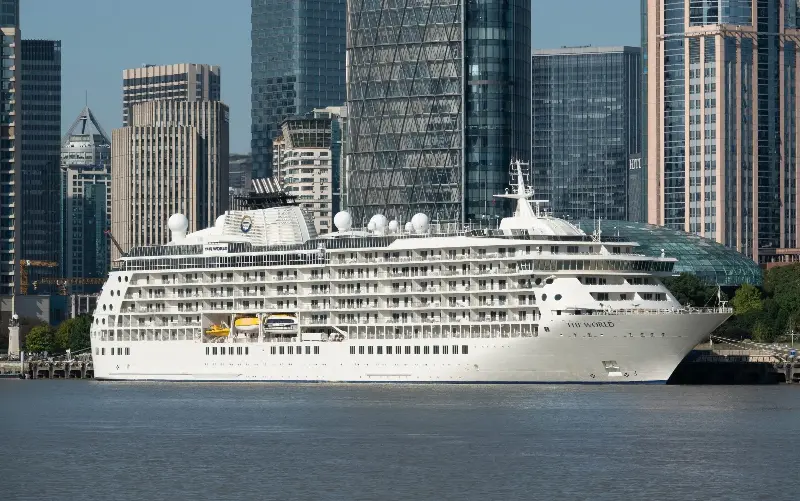
The original residential ship – but for multi-millionaires only, the World has visited more than 1,000 ports in more than 120 countries since 2002, circling the globe every two to three years. Described as a cross between a six-star hotel and a private yacht, it offers up to 200 residents and guests six restaurants, putting greens, the only full-size tennis court at sea, pools, a library, a lecture theatre and a spa.
Residents, who have paid between $3.5m (£2.6m) and $15m (£11.3m) for their individual accommodation, also collectively own the ship, which had a $30m (£22.6m) upgrade in 2025, with another dry dock scheduled in 2028. Chief executive Jessica Hoppe says: “The World has navigated global financial disruptions, changing fuel markets, the pandemic and evolving maritime regulations while continuing to invest in the ship, its people and its global experiences.”
Crescent Seas: delayed until at least 2030
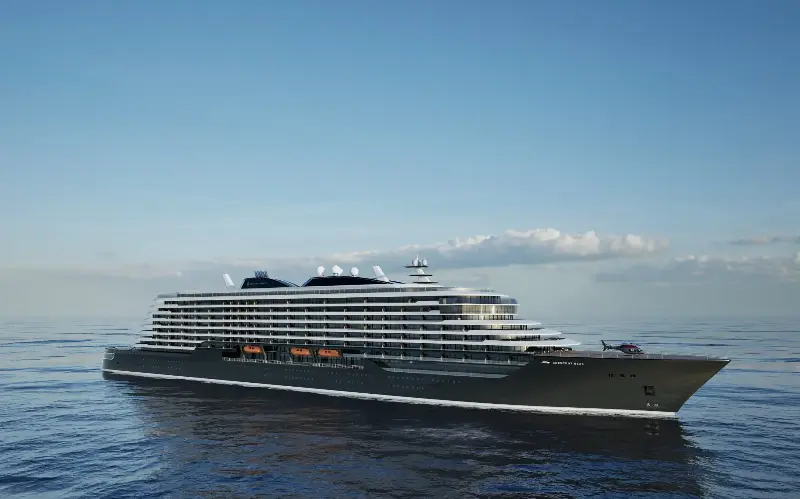
Founded by cruise industry veteran Russell Galbut, Crescent Seas originally planned to charter Regent Seven Seas ship Navigator in 2026 and Oceania’s Insignia the following year and give them both multi-million-pound makeovers. But after potential buyers told him they would prefer a purpose-built ship rather than converted older ones, the former chairman of Norwegian Cruise Line Holdings focused instead on designing a new vessel, the Ocean. Few details have yet been released about the ship, which will go on sale in 2029 with delivery expected in “the early 2030s”. Galbut says: “I’m excited about the industry and its future.”
Storylines: no construction or launch date
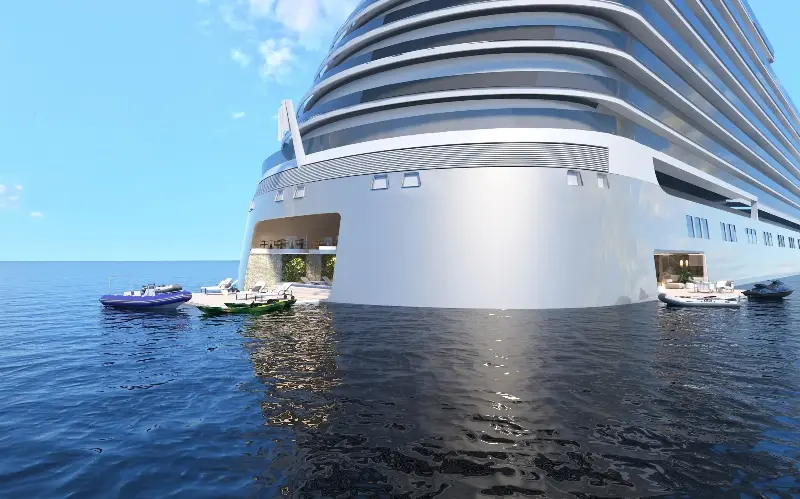
Having toyed with using existing ships, Storylines decided to launch a purpose-built vessel called Narrative, originally in 2023. The delivery year has been pushed back several times, and chief executive Alister Punton now says the company is working towards closing conditional financing covering the full shipbuilding price, adding: “We are not announcing a construction or launch date at this stage.”
Ambitious plans include 20 restaurants and bars, a garden/farm, microbrewery, bowling alley and 10,000-book library. The 530 residences cost up to £7.6m each, and there’s even a dog park. Punton says: “The Villa Vie situation understandably raises questions about residential cruising, but each project should be assessed on its own financial structure and operating model. Our user-pays model provides for residents to meet operating costs through ongoing fees, with contractual provisions allowing additional costs, including fuel-price spikes, to be passed on.”
Victoria Cruises Line: dogged by controversy
This line, which has repeatedly delayed plans for a residential ship, now says it is waiting to sell 78 per cent occupancy before announcing its “endless” cruise. Utah’s Division of Consumer Protection took action to stop the Hungarian company selling in the US following customers’ complaints that they had not been refunded for previously postponed voyages.
“I do not believe that consumers who paid Victoria Cruises Line will receive the promised cruise nor a refund of their payments,” the company’s former US brand ambassador, Valerie Linderoth, said in a court affidavit. A BBC investigation found would-be residents had sold their homes, rehomed pets and put their belongings into storage, only for their cruise to be cancelled. VCL claims it repaid all customers’ deposits aside from 38 that were withheld under its conditions of contract.
Ulyssia: very expensive and soon to be built
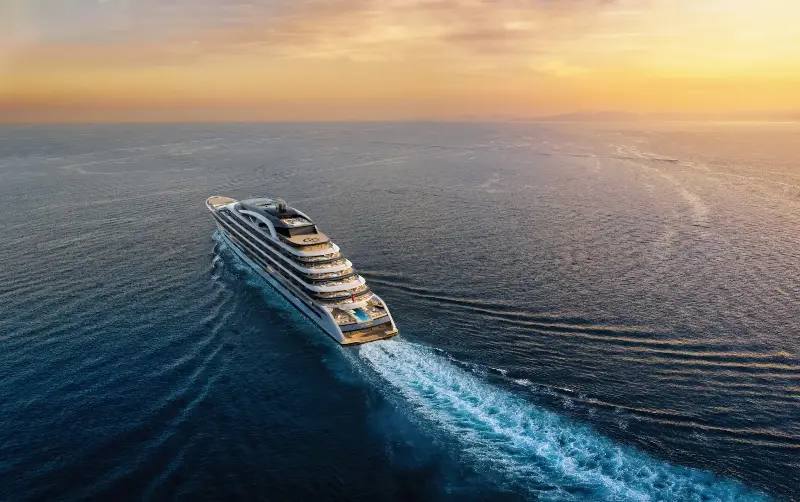
Equipped with two helicopters and two submarines, Ulyssia is for the richest of the rich, with prices for the 133 residences starting at €10m (£8.4m) and rising as high as €90m (£75m). It also aims to be the most sustainable yacht ever, with green methanol fuel, emission-free battery systems and advanced waste treatments. A letter of intent has been signed for construction to begin in Shanghai this year and finish by 2031.
Ulyssia’s founders previously managed and operated the World. Alain Gruber, the chief executive of Ulyssia Residences, says: “Ownership of the ship will transfer to the residential community upon delivery. Combined with a leadership team bringing decades of experience across the cruise industry, luxury hospitality and residential yachting, we have taken a considered approach to long-term operational and financial planning.”
Blue World Voyages: back to the drawing board
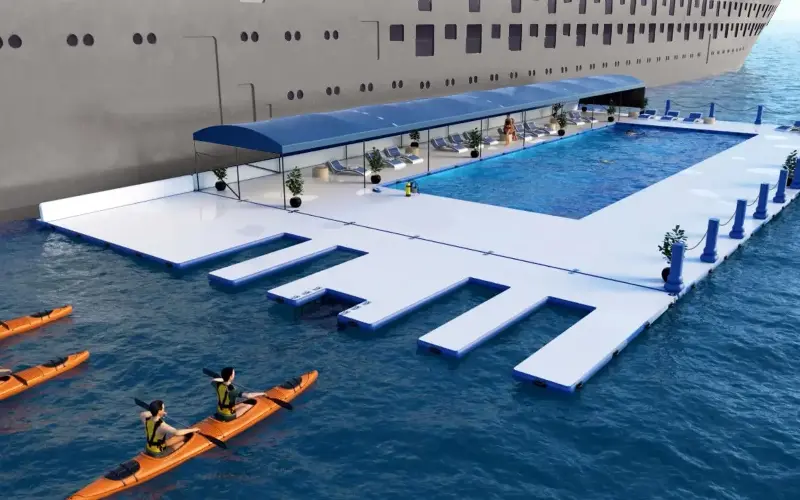
A plan for Blue World Voyages to acquire a ship from a “major five-star cruise line” in 2025 fell through and no replacement has yet been announced. Its “wellness experience at sea” envisions a vessel housing 160 suites for cruise passengers plus six $5m (£3.7m) penthouses and 40 other residences, costing up to $4m (£3m) each, for full-time travellers.
Co-founder Fredy Dellis, former chief executive of the World, says owners will enjoy personal butler service as well as a sun deck, lounge, chef’s table and private dining room. A spokesman adds: “Blue World’s deeply experienced team is taking the time needed to bring together the right elements, from ship to staffing and shoreside operations.”
Njord: behind schedule and not responding to enquiries
Described as a private superyacht, Njord will have 117 residences and be ice-strengthened for cruising in polar regions. Guests seeking adventure will be able to fly in the executive helicopter, dive in two submarines or ride an underwater scooter. There’s a serious side, too, with the ship equipped to do scientific and oceanographic research. Bio-methanol fuel and a hybrid electric power plant will mean it leaves no carbon footprint in its wake. The ship was first unveiled in 2019 and is forecast to sail in 2025. Owners Ocean Residences Development did not respond to enquiries about its current plans.
Dark Island: making little progress
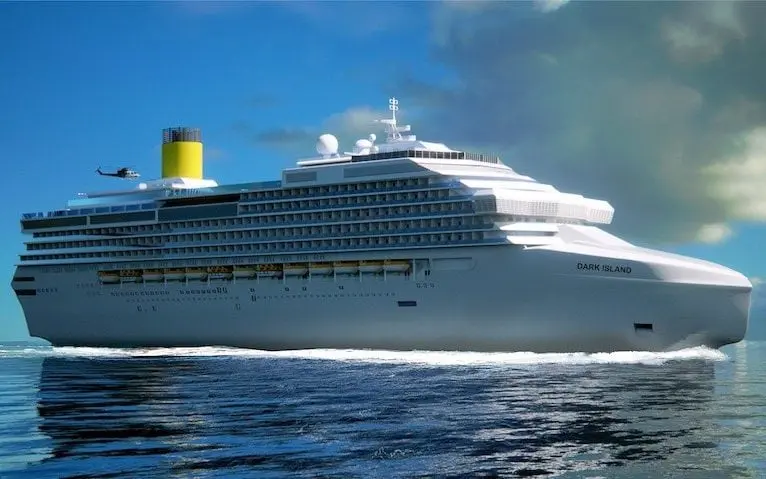
Making the Clyde a great shipbuilding centre again is one of the aims behind a £1.2bn project called Dark Island, first announced in 2021. The plan is to launch a 724-passenger ship – named after the sobriquet for the Hebridean isle of Benbecula – on the river by 2028, with suites costing from £4.2m to £41m. Three restaurants will serve classic Scottish dishes, as well as fare from regional destinations, and there will be a spa, hydrotherapy pool and fitness centre. Owner Clydebuilt hopes to create 3,000 Scottish jobs with the ship.
Managing director Tommy McGinn says: “We are still discussing the yards on the Clyde, but no firm decision has yet been made. Our business model depends on securing 70 per cent confirmed sales of our suites. We are on the road to achieving this target but are being subjected to a Catch-22 situation where some potential clients are willing to wait for construction and others are not.”
Life At Sea: gone bankrupt
This subsidiary of Turkish company Miray Cruises planned to send passengers on a 130,000-mile world voyage, but days before it was due to set sail in 2023, the project was abandoned because of a lack of funding (and ship). Life At Sea Cruises filed for Chapter 7 bankruptcy in Florida two years later.
The company had planned to buy a ship from German line Aida, but another cruise firm, Celestyal, snapped it up instead. Vedat Ugurlu, the owner of Miray Cruises, told customers – many of whom had flown to Istanbul to join the voyage – that investors had pulled out because of unrest in the Middle East.
Somnio: expired
Somnio – meaning “dream” – seems to have fallen asleep. The ship dubbed the world’s largest superyacht was originally planned to launch in 2024 with 39 apartments starting at €17m (£14m), but in January 2025, the High Court of Justice in London ruled that the Australian businessman behind the scheme, Carl Le Souef, was personally liable for more than £733,750 in unpaid fees to British company Winch Design. The project’s website has now expired, and attempts by The Telegraph to reach his spokesmen went unanswered.
Freedom Ship: watch this space
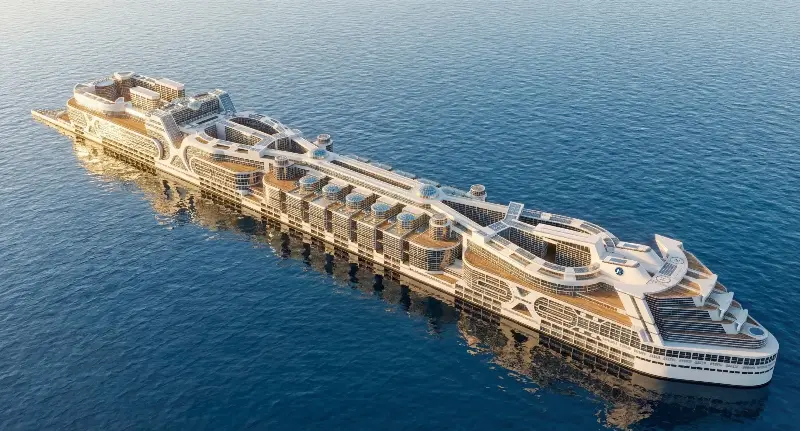
Other residential projects pale in comparison to Freedom Ship, an almost-mile-long floating city able to carry 80,000 people, served by schools, shops and even a hospital. The £12bn nuclear-powered leviathan would house 50,000 permanent residents alongside 10,000 cruisers and 20,000 crew.
Construction dates will be established once enough finance is raised, but Roger Gooch, the chief executive of Florida-based Freedom Cruise Line International, says: “We are currently involved in very positive discussions with foreign and domestic investors, as well as a number of interested potential joint venture partners.” He expects to make “a global announcement” in early 2027.