



The rise of South Korean beauty tourism reveals a new trend: beauty is no longer just a personal choice but is being standardized and "exported" globally. While technology promises personalization, the results are making faces increasingly similar.

Standing in front of the mirror in her Kuala Lumpur apartment, Aisyah gently touched the bridge of her nose. "Not refined enough," she murmured. On her phone screen was the image of a Kpop idol with smooth, white skin and almost perfect features.
The comparison repeated itself every day, until she decided to book a ticket to Seoul, not just for tourism but to "become more like him."
The trend of combining tourism and beauty treatments.
Aisyah's story reflects a rapidly accelerating trend: beauty tourism. As the Korean cultural wave spreads from music and films to fashion, the accompanying beauty standards are gradually becoming a global benchmark. While previously tourists bought cosmetics to take home, now they travel to Korea to transform their appearance.
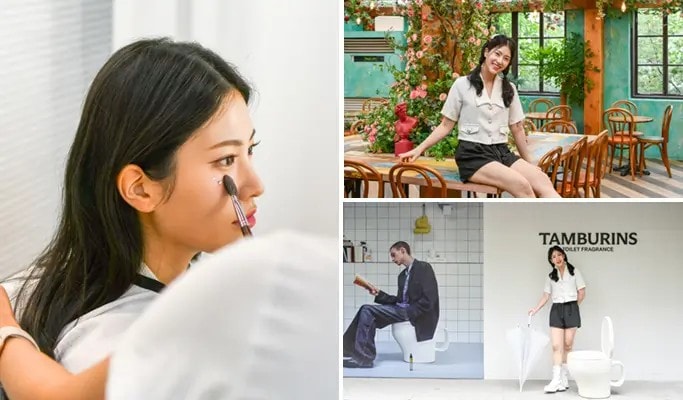
According to the Korea Institute for Medical Industry Development, South Korea is expected to welcome approximately 1.17 million international visitors for medical and cosmetic purposes in 2024, the highest number since 2009.
Dermatological services account for more than half of the demand, while cosmetic surgery accounts for over 10%. The industry is projected to generate approximately $26.4 billion in revenue by 2030, becoming one of the notable growth drivers of the economy.
The South Korean government is not staying out of the trend. Cosmetic tourism is considered part of a soft power strategy, with supportive policies ranging from visas and tax incentives to national promotion.
In its new positioning, K-beauty, the shortened name for the South Korean beauty industry, is not just a consumer industry, but a high-value export industry where service, technology, and national image intertwine.
At the heart of this ecosystem is Seoul, which attracts over 85% of medical tourists.
Costs are 30–50% lower than in the US or Europe, while quality is guaranteed by a dense and highly competitive network of clinics, making the city a top destination.
Services ranging from laser treatments and facelifts to skin rejuvenation therapies like Rejuran are designed as "specialty experiences," combining medicine and tourism.
Beyond just treatments, the South Korean beauty industry is shifting towards an experiential model.
At flagship stores and high-end clinics, customers can have their skin analyzed using AI, receive personalized consultations, and participate in comprehensive skincare, haircare, and body treatments. The technology promises unprecedented levels of personalization.
The price of the "Korean beauty standard "
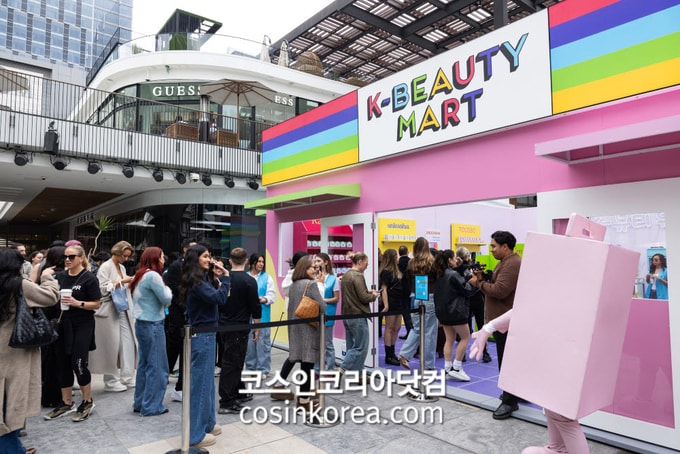
But it is at this point that a paradox begins to emerge. As technology becomes more sophisticated in its ability to "personalize," aesthetic results tend to become more uniform.
Most international visitors to South Korea have a clear expectation: a V-line face, fair skin, a high nose, and large eyes. Many cosmetic surgeries, even those tailored to individual needs, revolve around the same set of criteria.
A report by Yanolja Research indicates that South Korea's medical tourism industry is being driven primarily by "desire-based demand" rather than treatment demand.
This has led to a market that reflects popular taste, where famous role models become the benchmark. Many cosmetic surgeons admit that clients often bring pictures of celebrities and request that they "look as much like them as possible."
The gap between expectations and reality is also a problem. Despite the modern technology being promoted, not every experience delivers the desired results, especially for international visitors.
Meanwhile, the heavy reliance on the cosmetic sector also exposes imbalances in medical tourism, as serious treatment areas such as cancer or cardiovascular diseases have yet to recover to pre-pandemic levels.
South Korea's success in transforming beauty into a multi-billion dollar tourism industry is undeniable.
But behind that lies an increasingly clear question: as millions strive towards a common standard, where will the differences lead? For Aisyah, the trip to Seoul may have brought about a new perspective. But in that journey, what changed wasn't just her face, but also the way beauty is defined.